At riksgalden.se, we use cookies to improve your experience on our website and to collect statistics. We also use cookies for analyzing to improve our website. More about cookies.

Banking crisis management is focus of international conference in Stockholm
News 25 June 2026
For two days in June, the Stockholm International Banking Crisis Management Conference gathered 27 decision-makers, experts, and researchers on financial crises and banking crisis management. Read in brief about the event here.
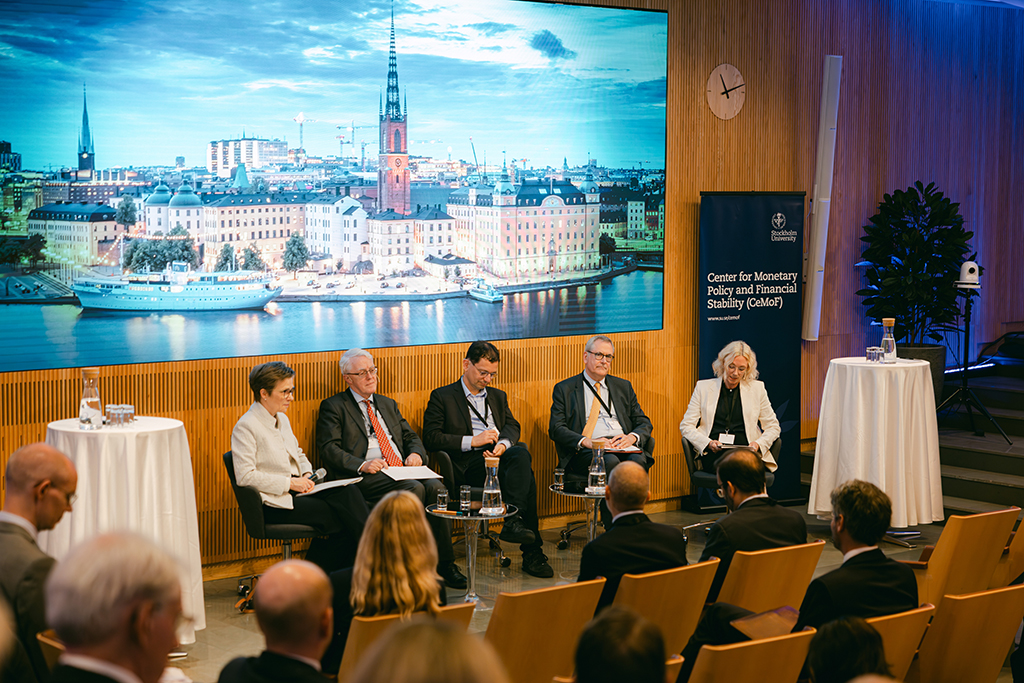
Panel members, from the left: Claudia Buch, John Vickers, Nicolas Véron, Dominique Laboureix and Karolina Ekholm.
The conference took place on 10 and 11 June and comprised presentations, discussions, and panel discussions with decision-makers, researchers, and experts from a number of countries. The speakers were invited by the Swedish National Debt Office and the Center for Monetary Policy and Financial Stability (CeMoF) at Stockholm University to share their perspectives and discuss managing banks in crisis.
Commemorated ten years of EU resolution regulations in Sweden
The conference marked ten years since the EU-wide resolution framework was introduced in Sweden. Over two days, discussions were held on how the regulatory framework has worked in practice and how it can be further developed to bolster financial stability.
“The conference was a way of calling attention to the significance of having a resolution framework for being prepared to manage banks in crisis – without severe disruption of the financial system ensuing or taxpayers being left with the bill. Several participants emphasised the importance of continuing to develop the framework and of bringing decision-makers and researchers together to discuss these issues from their respective perspectives,” says Debt Office Director General Karolina Ekholm.
Regulatory framework and practical application in focus on Day 1
The first day was hosted by the Debt Office with a focus on policy issues. The discussion topics included the progress made in strengthening the resilience of banks and establishing the new resolution framework, as well as the challenges that remain. Attention was also brought to the importance of access to liquidity in crisis situations.
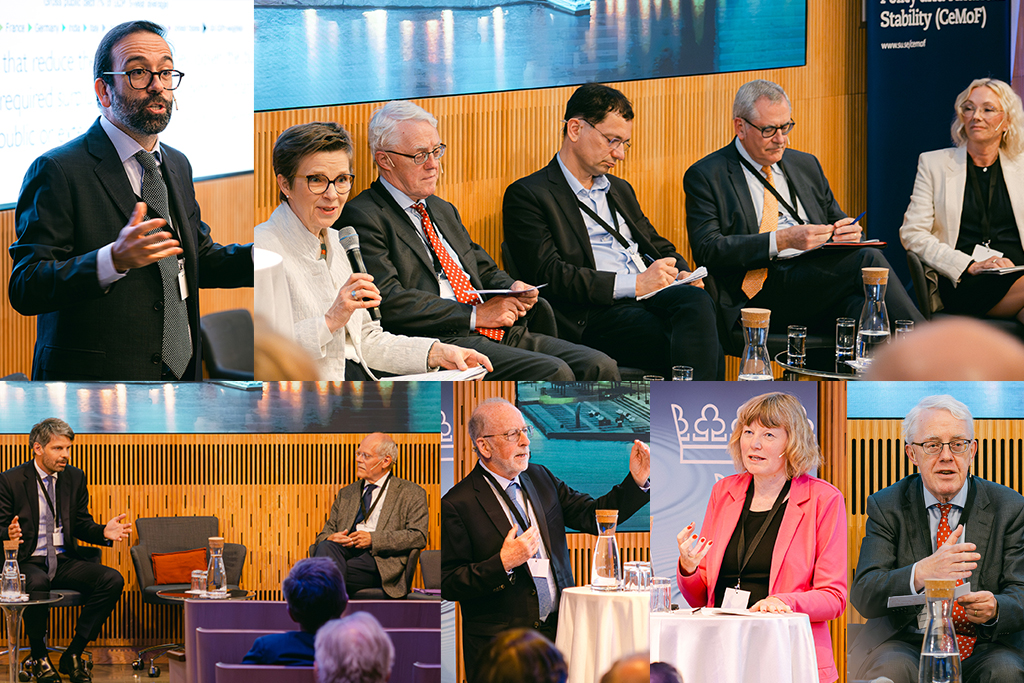 Speakers day 1. Top row from the left: Ricardo Reis, Claudia Buch, John Vickers, Nicolas Véron, Dominique Laboureix and Karolina Ekholm. Bottom row from the left: Alain Girard, Stefan Ingves, Patrick Honohan, Lene Kjaer and John Vickers.
Research and experiences in focus on Day 2
The second day focused on current research and was hosted by the Center for Monetary Policy and Financial Stability (CeMoF) at Stockholm University. Several studies were presented on how banking crisis management has developed and how the regulations can be adapted to new risks.
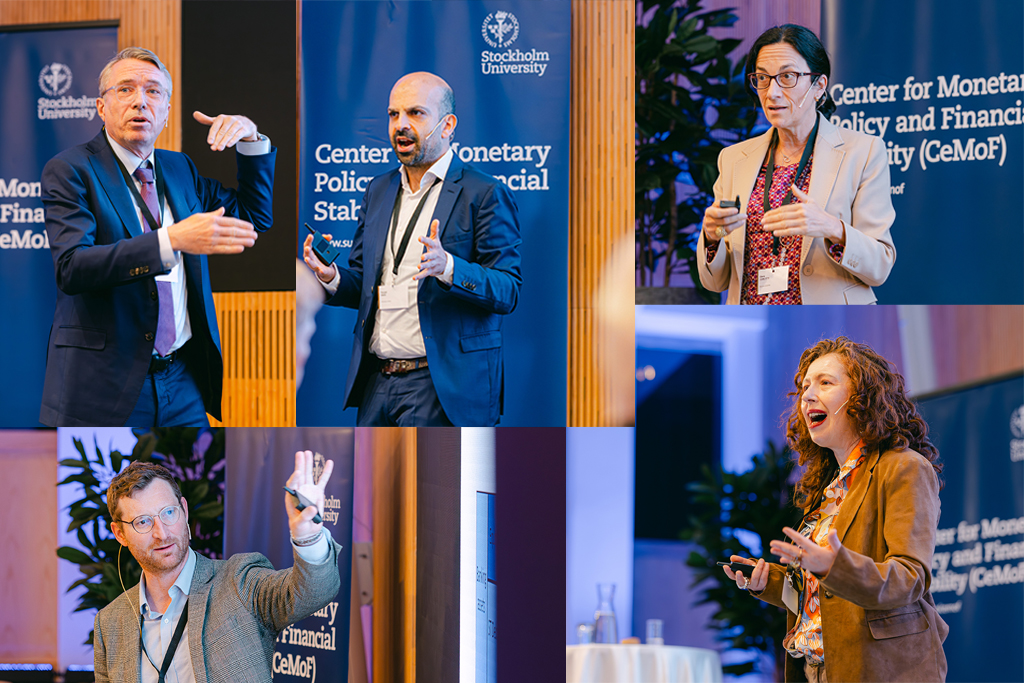
Speakers day 2. Top row from the left: Erlend Nier, Farzad Saidi, Elena Carletti. Bottow row from the left: Martin Oehmke and Mariassunta Giannetti.
Read comments from speakers
Some of the speeches are published on the websites of the respective organisations. Here are links to a few of them.
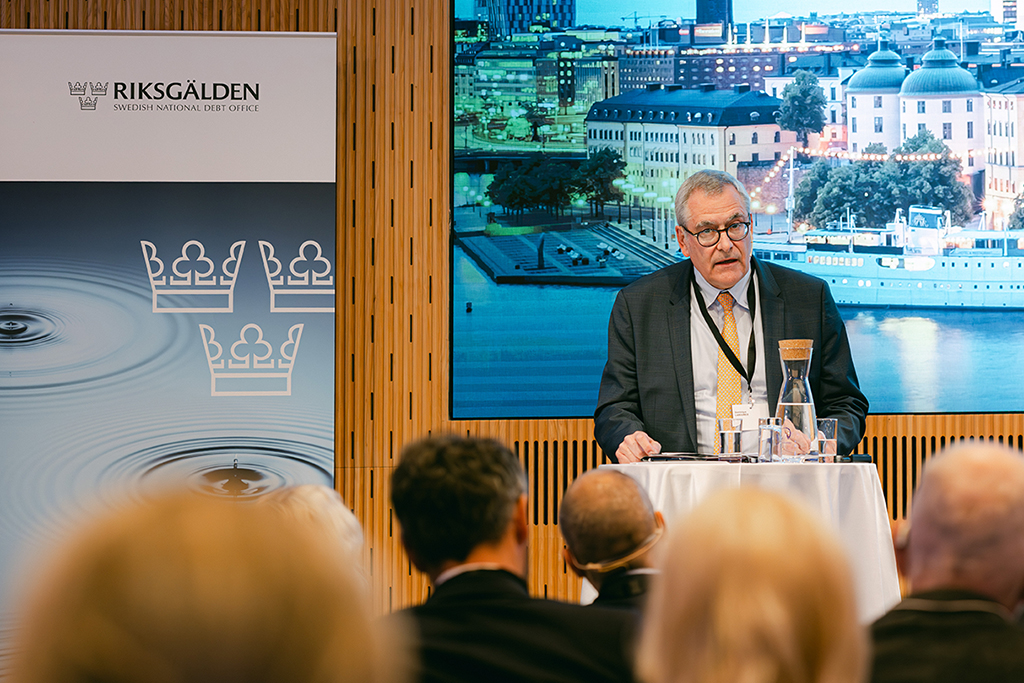 Dominique Laboureix is Chair of the Single Resolution Board (SRB). His speech was on the role of crisis management reforms in restoring and maintaining confidence in the financial system:
“Once trust runs out, history shows us, consequences can be catastrophic. In the worst cases, the entire system’s credibility needs to be rebuilt from scratch.”
The speech is available in its entirety on the Single Resolution Board’s website.
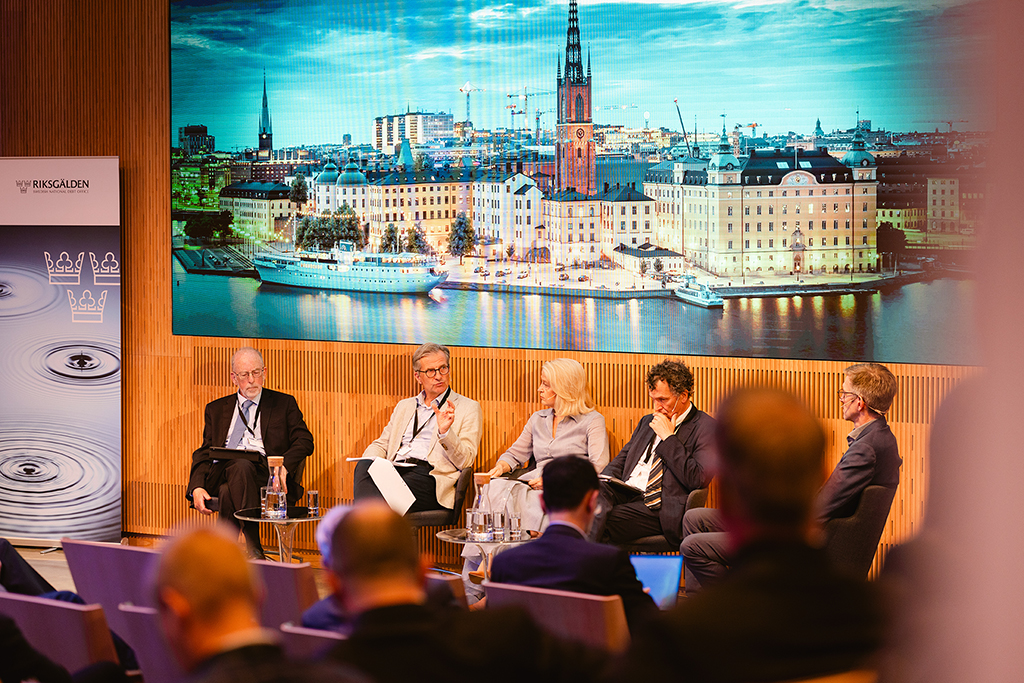
Panel members, from the left: Patrick Honohan, Erik Thedéen, Tuija Taos, Jan Marc Berk and Martin Flodén.
Riksbank Governer Erik Thedéen emphasised that banks and other monetary policy counterparties must ensure that they have both the operative capability and preparedness to borrow money from the Riksbank:
“To ensure that banks can borrow from the Riksbank quickly and efficiently when needed, we are considering introducing mandatory test transactions, but as a first step, our counterparties are now recommended to voluntarily test their operational capacity by borrowing from the Riksbank.”
The speech is available in its entirety on the Riksbank’s website.
More presentations can be found on Stockholm University's website.
Photography: Viveca Karström Encrantz